
CLIL Activity Types
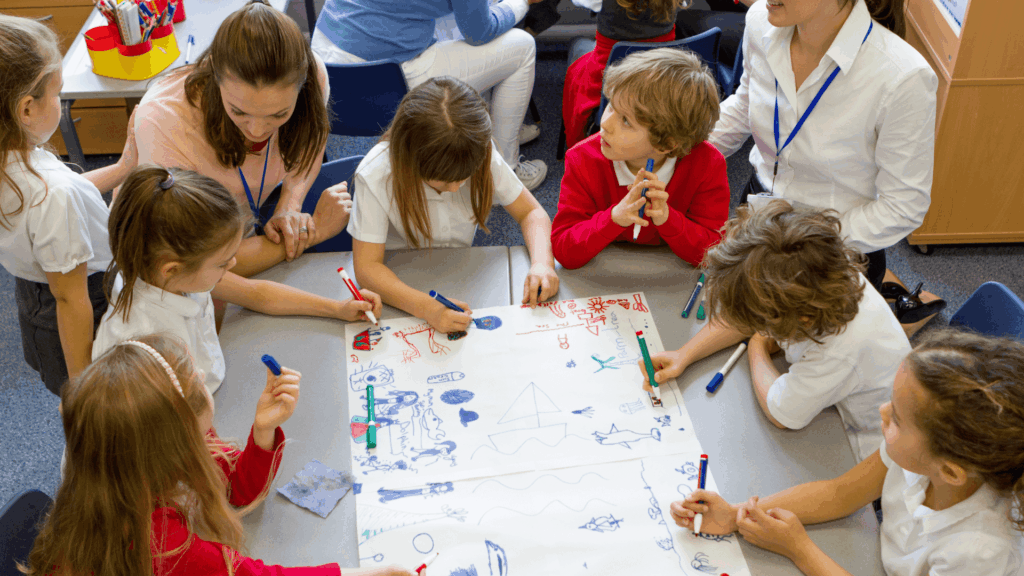
Many CLIL activities are similar to those found in English Language Teaching (ELT) coursebooks, such as gap fills, matching exercises, and multiple-choice questions. However, CLIL goes beyond these by including tasks that develop both subject-specific knowledge and communication skills. This lesson explores different CLIL activity types, how to use them, and how they support different stages of learning. You’ll also find examples adapted to an ESL classroom to help you plan effective lessons.
Learning Outcomes
By the end of this lesson, you will be able to:
- Identify a wide range of CLIL activity types suitable for different subjects.
- Match activities to their purpose in developing language and subject knowledge.
- Plan CLIL lessons using linked and sequenced activities.
- Adapt general activities for specific subjects and age groups.
- Support both oral and written production through purposeful tasks.
- Learning Outcomes
- Why CLIL Activities Matter
- Choosing CLIL Activities for Different Subjects
- Types of CLIL Activities with ESL Examples
- Planning CLIL Activities for Progression
- Adapting CLIL Activities
- Summary: CLIL Activities
- CLIL Activities: Common Questions And Answers
- CLIL Activities – A Practice Task
- CLIL Reference Resources
Why CLIL Activities Matter
In a CLIL classroom, CLIL activities are not just tasks to fill time. They are carefully chosen tools that guide learners in building both subject knowledge and language competence. When teachers understand the purpose behind each activity, they can create lessons that help students develop critical thinking, improve communication, and achieve academic success in two areas at once: the subject being taught and the language of instruction.
Well-planned CLIL activities serve three main purposes. Each purpose plays a key role in helping learners progress step by step, moving from basic understanding to higher-level thinking and communication.
Communicating Subject Content Orally
Oral communication is essential in CLIL because it allows learners to use the language actively while engaging with subject matter. When students talk about what they are learning, they do more than just practice grammar or vocabulary. They process complex ideas, make connections, and deepen their understanding of the topic.
Examples of oral communication tasks:
- Explaining the steps of a science experiment in pairs or small groups.
Example: After testing which materials are waterproof, students describe the procedure using phrases like “First, we poured water on the material. Then we observed what happened.” - Discussing historical events, such as the causes of a war or the impact of a discovery.
Example: Students role-play as historians debating why the Industrial Revolution started in Britain. - Participating in a pyramid discussion where they negotiate choices, such as selecting five environmental issues the class should study further.
- Taking part in a hot seat activity, where one student plays the role of a historical figure or scientist while classmates ask questions.
Why this matters:
- Students develop subject-specific vocabulary by using it in a real context.
- Speaking activities promote fluency, as learners must express ideas clearly and logically.
- Oral communication builds confidence, especially for students who may be shy about using the target language.
- It mirrors real-world academic situations, such as group projects or presentations, preparing students for future study or work.
Developing Listening and Reading Strategies
Listening and reading are receptive skills, meaning learners take in information rather than produce it. In CLIL, these skills are crucial because students must understand complex subject content in a second language. This can be challenging, especially when texts are dense or full of unfamiliar terminology.
Effective CLIL activities provide structured opportunities for learners to practice comprehension while also learning to identify key information.
Examples of listening activities:
- Watching a short science video with the sound off first, then discussing what they see before listening with sound.
- Listening to instructions for an experiment and sequencing them in the correct order.
- Matching sound clips to descriptions in a music class, such as identifying which rhythm pattern they hear.
Examples of reading activities:
- Reading a history passage and completing a Venn diagram to compare two historical periods.
- Interpreting a map in geography and labeling directions or regions.
- Reading a short environmental report and transferring information into a table.
Why this matters:
- Students build comprehension strategies, such as skimming for main ideas or scanning for details.
- Listening and reading tasks help students acquire new vocabulary naturally in context.
- These activities train learners to handle the dual challenge of language and subject complexity.
- Students gradually become independent learners, capable of reading textbooks or following lectures in the target language.
Tip for teachers:
Always provide scaffolding, such as pre-teaching key words, using visuals, or giving guided questions. This ensures learners don’t feel overwhelmed and can focus on both content and language.
Supporting Written or Physical Production
Once students have understood and discussed content, they need opportunities to produce work that demonstrates both their knowledge and their language skills. This production can be written or physical, depending on the subject.
Examples of written production:
- Writing a lab report after conducting a science experiment, using appropriate terminology and structure.
- Creating a poster presentation on a topic such as endangered animals or renewable energy sources.
- Completing a timeline of historical events, labeling each event with a short description.
- Writing a diary entry from the perspective of someone living in the past, such as a factory worker during the Industrial Revolution.
Examples of physical production:
- Building a model in a science or technology lesson, such as a volcano or a bridge.
- Acting out a freeze frame of a key moment in history to physically represent ideas.
- Performing a sports routine in physical education, following instructions given in English.
Why this matters:
- Production tasks reinforce learning by requiring students to actively apply what they know.
- Writing helps students organize their thoughts and use precise academic language.
- Physical production supports kinesthetic learners who understand best by doing.
- These tasks provide visible evidence of learning, which can be assessed by the teacher.
The Importance of Linking and Sequencing CLIL Activities
Choosing individual CLIL activities is not enough. For CLIL to be successful, activities must be linked and sequenced to form a logical learning path. This means each task builds on the one before it, gradually increasing in complexity.
How sequencing works:
- Start simple: Begin with a task that activates prior knowledge or introduces basic vocabulary.
Example: Brainstorming words related to weather before reading a geography text. - Move to guided practice: Use structured activities like matching or labeling to reinforce comprehension.
Example: Matching climate zones to descriptions after a reading activity. - Encourage collaboration: Include group discussions or pair work to promote communication and deeper understanding.
Example: In pairs, students explain why certain areas have specific weather patterns. - End with independent production: Finish with a challenging task where learners apply everything they’ve learned.
Example: Students create a poster comparing two climate zones, using their own words and visuals.
Why linking matters:
- It ensures lessons are coherent and have a clear purpose.
- Students experience a sense of progress, which motivates them to keep learning.
- Gradual difficulty prevents frustration and supports different ability levels.
- Linked tasks help teachers track learning step by step, making assessment easier.
Choosing CLIL Activities for Different Subjects
Not all activities work equally well across different subjects. While some tasks, like matching or group discussions, can be used in almost any context, others are more effective when tied to the specific skills and content of a subject. Choosing the right activity type is essential to ensure that learners engage with the subject matter and practice relevant language at the same time.
When selecting activities, think about:
- The core skills the subject develops (e.g., observation in science, interpretation in history).
- The type of language students will need (e.g., descriptive, analytical, procedural).
- How to scaffold learning so that students can handle both the content and the language demands.
- Ways to make tasks interactive and meaningful, so learners are motivated and actively involved.
Below are examples of how CLIL activities can be matched to different subjects, along with ideas for adapting them to an ESL classroom.
Art and Craft
Subject focus:
Observation, creativity, and visual representation of ideas.
Why it matters in CLIL:
Art activities encourage learners to use descriptive language, follow instructions, and explain creative choices. They also make abstract concepts more concrete through visual representation.
Example activity:
Observing and Drawing Patterns
- Show students a traditional Greek plate with repeated patterns.
- Discuss the shapes, colors, and symbols used.
- Students then design their own plate using similar patterns.
- Finally, they explain their design to a partner or the class using target vocabulary, such as “My pattern has three circles and four triangles. The colors represent the four seasons.”
Other activity ideas:
- Create a class mural to represent environmental themes like pollution or recycling.
- Design posters illustrating concepts from science, such as the water cycle or food chains.
- Write step-by-step instructions for creating an artwork, then swap and follow another student’s instructions.
Language focus:
- Descriptive adjectives (round, symmetrical, bright).
- Instructions and imperatives (draw, paint, cut, glue).
- Explaining artistic choices (I chose blue because it symbolizes peace).
Mathematics
Subject focus:
Problem-solving, logical thinking, and using precise mathematical language.
Why it matters in CLIL:
Math is a universal language, but explaining concepts in English requires specific vocabulary and sentence structures. CLIL activities help students practice this academic language while applying mathematical reasoning.
Example activity:
Describing Geometric Shapes
- Provide a set of shape cards (triangle, pentagon, hexagon, etc.).
- Students describe each shape using key terms like sides, angles, equal, symmetrical.
- Their partner guesses which shape is being described.
- This reinforces both content understanding and spoken fluency.
Other activity ideas:
- Solve word problems together, focusing on key mathematical phrases like total, difference, multiply by, divide by.
- Create graphs or charts using data collected from a class survey (e.g., favorite foods or hobbies).
- Match equations to their visual representations in a diagram or table.
Language focus:
- Comparative structures (greater than, less than, equal to).
- Sequencing words (first, then, next, finally).
- Vocabulary for operations (add, subtract, multiply, divide).
History
Subject focus:
Understanding timelines, causes and effects, and interpreting historical evidence.
Why it matters in CLIL:
History relies heavily on reading and interpreting texts, such as primary sources, maps, and timelines. Students also need to express opinions and build arguments about past events, which develops both critical thinking and advanced language skills.
Example activity:
Analyzing Historical Sources
- Provide students with an image of a historical event, such as a photograph from the Industrial Revolution.
- Students work in groups to answer guiding questions:
- What do you see in the picture?
- What evidence shows that this event happened in the past?
- How might the people in the picture have felt?
- Finally, they write a short paragraph explaining the significance of the event.
Other activity ideas:
- Create a timeline of major events, labeling each with a short description.
- Role-play historical figures in a hot seat activity, where classmates ask questions about their decisions or experiences.
- Compare two periods in history using a Venn diagram to identify similarities and differences.
Language focus:
- Past tense verbs (was, were, lived, fought, discovered).
- Cause and effect connectors (because, therefore, as a result).
- Phrases for expressing opinions (I believe that…, In my opinion…).
Science
Subject focus:
Observation, experimentation, classification, and understanding natural processes.
Why it matters in CLIL:
Science involves hands-on activities and precise language to describe experiments, materials, and results. It is ideal for combining practical tasks with language learning.
Example activity:
Conducting a Fair Test
- Topic: Waterproof materials.
- Students test three different materials to see which is most waterproof.
- They follow the same procedure for each material, ensuring the test is fair.
- Afterward, they record their results in a table and share their findings orally.
Other activity ideas:
- Create classification keys for plants or animals using yes/no questions.
- Observe a chemical reaction and describe it using target vocabulary like bubbles, color change, dissolve.
- Write a lab report with sections for materials, method, results, and conclusion.
Language focus:
- Procedural verbs (measure, mix, observe, record).
- Comparative structures (more waterproof than, less dense than).
- Scientific connectors (first, next, after that, finally).
Physical Education (PE)
Subject focus:
Movement, coordination, health, and fitness.
Why it matters in CLIL:
PE provides opportunities for physical learning combined with language practice, especially through instructions, commands, and descriptive vocabulary. It also encourages group interaction and cooperation.
Example activity:
Ranking Activities by Strength Used
- Show students a video of different physical activities, such as swimming, running, and weightlifting.
- Students work in pairs to rank them from least to most physically demanding.
- They explain their decisions using comparative language.
Other activity ideas:
- Play a relay game where students must listen to instructions and complete a sequence of actions.
- Label a diagram of the human body with muscle groups or joints.
- Keep a fitness journal in English, recording daily exercise and progress.
Language focus:
- Action verbs (run, stretch, jump, lift).
- Comparatives and superlatives (faster, stronger, most difficult).
- Instructions (stand up, bend your knees, keep your back straight).
Music
Subject focus:
Listening skills, rhythm, and musical interpretation.
Why it matters in CLIL:
Music naturally develops listening comprehension and is ideal for connecting sound with descriptive language. It also encourages creativity and interpretation.
Example activity:
Matching Rhythm Patterns to Sound Clips
- Play short sound clips of different rhythm patterns.
- Students match each clip to the correct visual representation, such as a written musical note pattern or image.
- They describe the sounds using target vocabulary like fast, slow, high, low, soft, loud.
Other activity ideas:
- Write lyrics to a simple melody using vocabulary from another subject.
- Listen to a piece of music and discuss the emotions it conveys.
- Identify different instruments by their sounds and describe how they are played.
Language focus:
- Descriptive adjectives (smooth, sharp, steady, rapid).
- Verbs for playing instruments (strum, tap, blow, shake).
- Expressing opinions (I like this piece because…).
ICT (Information and Communication Technology)
Subject focus:
Digital skills, data organization, and problem-solving.
Why it matters in CLIL:
ICT tasks help students use English for practical, real-world purposes, such as following digital instructions or entering data. They also develop technological literacy alongside language learning.
Example activity:
Entering and Organizing Data in Spreadsheets
- Students collect simple data, such as classmates’ favorite fruits or sports.
- They input the information into a spreadsheet and create a bar chart.
- Finally, they present their findings to the class using phrases like “Most students prefer…” or “Only two students chose…”.
Other activity ideas:
- Follow step-by-step instructions to design a basic presentation in PowerPoint.
- Conduct an online research project and summarize findings in a document.
- Use interactive websites or apps to practice subject-related skills.
Language focus:
- Digital verbs (click, type, save, upload).
- Instructions and sequencing (first, next, then, finally).
- Presenting results (The data shows that…, According to the graph…).
Types of CLIL Activities with ESL Examples
CLIL includes a wide variety of activity types. Below are some of the most effective ones, along with examples for an ESL classroom.
Loop or Domino Games
Purpose:
To revisit and practice vocabulary, build accuracy, and develop intensive listening skills.
Procedure:
Prepare cards with subject-specific vocabulary and definitions. Each student receives one or more cards.
- A student reads a definition aloud.
- The student with the matching word calls it out and then reads their definition.
- The process continues until all cards have been used.
Example in ESL:
Topic: Environmental science
- Cards include words like pollution, rainforest, climate, ecosystem.
- Definitions focus on clear, simple explanations.
- Students practice both listening and speaking while revising key terms.
Pyramid Discussion
Purpose:
To develop oral communication, negotiation, and vocabulary.
Procedure:
- Present a list or images related to the subject.
- Each student individually selects their top five items.
- Students pair up and agree on five together.
- Pairs then join larger groups to reach a final decision.
- Finally, the class votes and discusses the most popular choices.
Example in ESL:
Topic: Famous inventions
- Students choose five inventions they think changed the world.
- They discuss their choices using target language structures like “I think this is important because…”.
Hot Seat
Purpose:
To build questioning skills, communicative fluency, and accuracy in reporting facts.
Procedure:
- One student sits at the front as a “character” such as a scientist, explorer, or historical figure.
- The class asks questions, and the student in the hot seat answers based on what they know or what they’ve researched.
Example in ESL:
Topic: History
- A student plays the role of Christopher Columbus.
- Others ask questions like “Why did you want to explore new lands?” or “What challenges did you face?”.
Identification Keys
Purpose:
To classify, compare, and identify items while developing higher-order thinking skills.
Types of Keys:
- Binary Key: Questions with only two possible answers, progressing step-by-step.
- Lateral Key: Used to compare features.
Example in ESL:
Topic: Animals
- Binary Key Questions: Does it have wings? Does it live in water?
- Students work in pairs to identify animals while practicing descriptive language.
Poster Presentations
Purpose:
To combine research, writing, and speaking in one task.
Procedure:
- Students research a topic.
- They create a poster with images, diagrams, and short text.
- Finally, they present their poster to the class.
Example in ESL:
Topic: Endangered animals
- Students research one animal, write facts, and include visuals.
- They present using target vocabulary like habitat, predators, and conservation.
Freeze Frames
Purpose:
To physically represent an idea, scene, or event, making abstract concepts more concrete.
Example in ESL:
Topic: Historical events
- Groups create a freeze-frame of an important moment, such as signing a peace treaty.
- The rest of the class guesses the event and describes what they see.
Information Transfer Activities
Purpose:
To develop reading and comprehension by moving information from one format to another.
Example in ESL:
Topic: Geography
- Students read a passage about climate zones and then complete a table or map based on the information.
Planning CLIL Activities for Progression
A successful CLIL lesson is more than just a collection of fun activities. Each task should build on the one before it, creating a clear and purposeful journey for the learners. This progression ensures that students don’t simply memorize facts or vocabulary, but develop understanding step-by-step, gradually increasing their cognitive and language skills.
Start with Tasks that Activate Prior Knowledge
Before introducing new concepts, it is important to connect the lesson to what students already know. Activating prior knowledge helps learners recall familiar ideas, build confidence, and prepare their minds for new information.
This step also allows the teacher to assess students’ starting point, identifying gaps in understanding or language.
Ideas for CLIL Activities:
- Brainstorming:
- Write a topic on the board, such as renewable energy or ancient civilizations.
- In groups, students brainstorm words or phrases they already know related to the topic.
- This can be done on paper, a whiteboard, or digitally using tools like Padlet.
- Mind Maps:
- Provide a blank mind map with the topic in the center.
- Students add related words, concepts, or questions in connected bubbles.
- Pairs can compare their maps and add new ideas they hadn’t thought of.
- Visual Prompts:
- Show a picture, diagram, or short video without explanation.
- Ask students to describe what they see using target language.
- This activates both vocabulary and curiosity.
Example in ESL Science:
For a lesson on the water cycle, the teacher displays a diagram of clouds, rain, rivers, and evaporation.
- Students label as many parts as they know in English.
- The teacher collects responses and writes key terms like evaporation, condensation, and precipitation on the board, introducing correct spellings and pronunciation.
Why This Step Matters:
- Helps students connect old and new knowledge, making learning meaningful.
- Encourages participation from all learners, even those who may not feel confident.
- Reduces anxiety by showing that students already know something about the topic.
- Provides teachers with insight into students’ language level and subject understanding.
Move on to Lower-Order Thinking Skills
Once prior knowledge has been activated, students are ready to engage with new content in a structured way. At this stage, focus on lower-order thinking skills, which involve understanding, remembering, and organizing information.
According to Bloom’s Taxonomy, these skills include:
- Remembering
- Understanding
- Applying
These are foundational steps that prepare students for more complex tasks later in the lesson.
Ideas for CLIL Activities:
- Matching:
- Match vocabulary words to definitions or images.
- Example: Match pictures of animals to their names or characteristics in a biology lesson.
- Labeling:
- Label parts of a diagram, map, or chart.
- Example: Label the parts of a volcano or the sections of a plant cell.
- Gap-Fill Activities:
- Complete sentences or texts using missing key words.
- Example: “Water changes from a liquid to a gas during ________.”
- Sorting and Categorizing:
- Sort cards or terms into groups.
- Example: In a nutrition lesson, sort foods into categories such as carbohydrates, proteins, and fats.
- True/False Questions:
- Read statements and decide if they are correct.
- Example: “The Earth has two moons. True or False?”
Example in ESL History:
Topic: The Industrial Revolution
- Students match vocabulary like factory, steam engine, and railway with pictures.
- They then complete a timeline activity, placing events in the correct order.
- This builds a solid foundation before moving on to analyzing causes and effects.
Why This Step Matters:
- Builds confidence as tasks are structured and achievable.
- Provides clarity by introducing key language and concepts in a controlled way.
- Prepares students for more complex problem-solving later in the lesson.
Progress to Higher-Order Thinking Skills
Once students have a solid grasp of the basics, it’s time to challenge them with higher-order thinking skills. This involves analysis, interpretation, evaluation, and creativity. At this stage, learners begin to think deeply about the content, going beyond memorization to make connections and form their own ideas.
Higher-order thinking skills include:
- Analyzing: Breaking information into parts to understand it better.
- Evaluating: Judging ideas or solutions based on criteria.
- Creating: Combining information to produce something new.
Ideas for CLIL Activities:
- Analyzing Graphs and Data:
- Example: Students examine a bar graph showing population growth and explain trends in their own words.
- Comparisons and Venn Diagrams:
- Example: Compare two ecosystems, noting similarities and differences in animals, plants, and climates.
- Interpretation of Sources:
- Example: In history, students examine photographs or documents and discuss what they reveal about life at the time.
- Problem-Solving Tasks:
- Example: Design a plan to reduce pollution in their city, using data provided in class.
- Debates and Discussions:
- Example: Debate whether renewable energy should replace fossil fuels, using evidence to support arguments.
Example in ESL Geography:
Topic: Natural Disasters
- Students analyze photos of different disasters such as floods, earthquakes, and wildfires.
- They categorize them by type, then discuss possible causes and solutions.
- Finally, they evaluate which solution would be most effective and explain why.
Why This Step Matters:
- Develops critical thinking, preparing students for real-world challenges.
- Encourages language use for complex ideas, such as giving reasons and making predictions.
- Creates a sense of ownership as learners form and express their own opinions.
Encourage Language Production: Spoken and Written
Language production should happen throughout the lesson, but at this stage, it becomes a primary focus. Students need to use both spoken and written language to express their ideas clearly and accurately.
CLIL activities should provide structured opportunities for learners to practice academic language, not just everyday conversation.
Ideas for CLIL Activities: Speaking
- Role-plays and Simulations:
- Example: A student plays the role of a scientist presenting research findings while classmates ask questions.
- Hot Seat Activity:
- Example: A student becomes a historical figure, and others interview them.
- Group Discussions:
- Example: Students discuss the pros and cons of different energy sources.
Ideas for CLIL Activities: Writing
- Reports:
- Example: Write a lab report after a science experiment.
- Diary Entries or Creative Writing:
- Example: Write a diary entry from the point of view of someone living during World War II.
- Summaries:
- Example: Summarize a passage about climate change in five sentences.
Example in ESL Environmental Studies:
Topic: Deforestation
- After discussing causes and effects, students work in groups to create a short oral presentation.
- They then write a summary of their ideas, including solutions to reduce deforestation.
Why This Step Matters:
- Reinforces language learning by requiring active use of vocabulary and grammar.
- Provides evidence of understanding for assessment.
- Builds communication skills needed for future academic and professional contexts.
End with an Application Task
The final step in a CLIL lesson should allow students to apply what they’ve learned in a meaningful, creative way. This is where everything comes together: subject knowledge, language skills, and higher-order thinking.
Application tasks often take the form of projects, presentations, or real-world simulations. They are engaging, memorable, and give students a chance to demonstrate their growth.
Ideas for CLIL Activities:
- Project-Based Learning:
- Example: Create a model of a sustainable city, including written descriptions of each part.
- Presentations:
- Example: Give a group presentation about a historical figure or scientific discovery.
- Problem-Solving Challenges:
- Example: Design a plan to protect endangered species and present it to the class.
- Role-Playing Real-Life Scenarios:
- Example: Simulate a United Nations meeting where students represent different countries debating environmental policies.
Example in ESL Science:
Topic: Renewable Energy
- Groups design a poster comparing solar, wind, and hydro energy.
- They include diagrams, statistics, and written explanations.
- Each group presents their poster to the class using academic language such as “This method is more sustainable because…”.
Why This Step Matters:
- Helps students see the purpose of what they’ve learned.
- Encourages creativity and independent thinking.
- Provides a natural way to assess both language and content knowledge.
- Builds skills that transfer beyond the classroom, such as teamwork and public speaking.
Adapting CLIL Activities
Many traditional activities used in mainstream subject classes or in English Language Teaching (ELT) coursebooks can work in a CLIL classroom. However, because CLIL learners are engaging with two types of learning at once—subject content and a second language—these activities often need to be modified to meet their needs.
Pre-teach Key Vocabulary Before the Activity Begins
One of the most common barriers in CLIL lessons is unfamiliar vocabulary. Students might understand the concept in their first language but struggle to follow instructions or express their ideas in English.
Why it’s important:
- Gives learners the words they need to access subject content.
- Reduces frustration and anxiety by building confidence before the task starts.
- Encourages accurate use of subject-specific terms, such as evaporation, angle, or photosynthesis.
How to do it:
- Introduce new words through visuals, real objects, or demonstrations.
- Use flashcards or a digital presentation to show the word, its meaning, and a picture.
- Practice pronunciation and spelling together as a class.
- Display a word wall or glossary poster in the classroom for easy reference.
Example in ESL Science:
Before a lab experiment on plants, pre-teach words like stem, roots, absorb, and nutrients.
- Show real plants or pictures and label each part.
- Have students repeat the words and practice simple sentences:
“The roots absorb water.”
“The stem supports the plant.”
Change the Task to Focus on Subject-Specific Content
Some general CLIL activities, like matching games or word searches, may be fun but not directly connected to the subject being taught. By adjusting the content, you ensure that students are practicing language while learning important academic concepts.
Why it’s important:
- Keeps lessons relevant and purposeful.
- Helps students see the connection between language and subject learning.
- Makes time spent in class more efficient and focused.
How to do it:
- Replace generic vocabulary with subject-specific terms.
- Adapt instructions so that the final product demonstrates both language use and subject understanding.
- Include real-life contexts to make tasks more meaningful.
Example in ESL Geography:
Instead of a simple word search with everyday words like dog, house, and tree, create one with geography terms such as river, delta, island, and peninsula.
Students then:
- Find and circle the words.
- Match each word to a definition or picture.
- Use the words to describe a real map in pairs.
Add Visual Support Like Pictures, Diagrams, or Charts
CLIL learners benefit greatly from visual aids because they reduce reliance on text and make complex ideas easier to grasp. Visuals also support students with lower language proficiency, allowing them to participate fully.
Why it’s important:
- Makes abstract or difficult concepts more concrete and understandable.
- Helps students remember new vocabulary and content.
- Provides context clues for meaning without needing full translations.
Types of visual support:
- Pictures or photos
- Diagrams and flowcharts
- Maps or timelines
- Physical models or real objects
- Graphic organizers like Venn diagrams or tables
Example in ESL History:
When teaching about ancient civilizations, provide:
- A timeline showing key events.
- Maps of where each civilization was located.
- Images of artifacts or structures, such as the pyramids of Egypt.
Students then use these visuals to:
- Label maps and timelines with relevant vocabulary.
- Compare civilizations by placing pictures under headings like Architecture, Government, and Trade.
- Discuss similarities and differences using sentence frames.
Use Scaffolding to Support Language Production
Scaffolding refers to temporary support provided by the teacher to help students successfully complete a task they couldn’t do alone. In CLIL, scaffolding is especially important because students are working with challenging subject matter and new language at the same time.
Why it’s important:
- Allows all students, regardless of language ability, to participate and succeed.
- Encourages learners to gradually take more responsibility for their own learning.
- Reduces cognitive overload by breaking complex tasks into manageable steps.
Scaffolding techniques:
- Sentence starters:
Provide the beginning of a sentence to guide students’ responses.
Example: “The most important factor is…” or “This diagram shows that…” - Word banks:
Give a list of key vocabulary for students to use during the activity.
Example: A list of terms like evaporation, condensation, precipitation for a weather lesson. - Guiding questions:
Offer questions to help students focus their thinking.
Example: “What do you notice about the shape of this graph?” - Modeling and demonstrations:
Show students what a completed task should look like before they begin.
Example in ESL Mathematics:
Students are learning how to describe graphs.
- The teacher provides sentence starters:
- “The graph shows an increase in…”
- “The number of ___ is higher than ___.”
- Students use these frames to present their observations in English confidently.
Link CLIL Activities to Previous Lessons
Linking CLIL activities creates a continuous learning experience rather than a series of isolated lessons. This helps students see connections between topics and reinforces both subject content and language structures.
Why it’s important:
- Builds on prior knowledge, which supports long-term retention.
- Helps students review and recycle vocabulary.
- Provides a sense of progress and achievement over time.
How to do it:
- Begin each lesson with a short review activity related to the previous class.
- Use recurring themes or topics throughout the unit.
- Refer back to earlier work during discussions and assignments.
Example in ESL Environmental Science:
In one lesson, students learn vocabulary for types of pollution.
In the next lesson, they use the same vocabulary to:
- Watch a short video on pollution sources.
- Identify examples of each type in the video.
- Discuss possible solutions using previously learned phrases like “We should reduce…” or “One way to solve this problem is…”.
Example of Adapting a Video Clip
Video clips are excellent tools for CLIL activities because they combine visual and auditory information. However, without careful planning, students might struggle to understand everything they see and hear. Here’s how to adapt a video activity step-by-step:
Topic: The Water Cycle (ESL Science Lesson)
- Show the video without sound:
- Students focus on visuals only.
- Ask them to describe what they see using simple sentences:
“The sun is shining.”
“The water is moving into the clouds.”
- Pair or group discussion:
- Students discuss what they think is happening in the video.
- This encourages prediction and activates background knowledge.
- Introduce key vocabulary:
- Teach words like evaporation, condensation, and precipitation.
- Use flashcards, diagrams, or real-life demonstrations to explain meanings.
- Play the video again with sound:
- This time, students listen for the target vocabulary.
- Pause at key moments to check comprehension.
- Follow-up task:
- Students complete a diagram of the water cycle using the words they learned.
- They then explain the cycle orally or in writing, using full sentences.
Why this works:
- Breaking the task into stages prevents overload.
- Students build understanding step-by-step, reinforcing both visual and auditory learning.
- The follow-up task demonstrates that they can apply new knowledge in English.
Summary: CLIL Activities
- CLIL activities combine language learning with subject content.
- Effective activities are linked, sequenced, and purposeful.
- Common CLIL activity types include:
- Loop or domino games
- Pyramid discussions
- Hot seat questioning
- Identification keys
- Poster presentations
- Freeze frames
- Information transfer tasks
- Activities should start simple and become progressively more challenging.
- Adapt tasks to include subject-specific vocabulary and skills.
- Use visual support, scaffolding, and clear instructions to help ESL learners succeed.
CLIL Activities: Common Questions And Answers
Q1. What makes CLIL activities different from regular ESL activities?
CLIL activities focus on both language and subject content. They are designed to teach English while helping students understand topics like science or history.
Q2. How do I know if an activity suits my class?
Choose activities that match your students’ language level, the subject matter, and the lesson goals. Activities should be meaningful and clearly linked to learning outcomes.
Q3. Can I use the same activity for different subjects?
Yes. Many activities, such as matching or group discussions, can be adapted for different subjects by changing the vocabulary and materials.
Q4. What if my students don’t have enough vocabulary for the activity?
Pre-teach essential words, use visuals, and provide sentence frames to help students participate successfully.
Q5. How can I make CLIL lessons more engaging?
Include a mix of movement, discussion, and hands-on tasks. Real-life connections and projects make learning meaningful and memorable.
CLIL Activities – A Practice Task
For questions 1–7, match correct classroom purpose (1-7) with the most suitable activity type (A-G)
Activity Type
A. Web searches
B. Pyramid discussion
C. Loop or domino games
D. Identification keys
E. Fair testing (Science example)
F. Web searches
G. Hot seat
Classroom Purpose
(1) Develop questioning skills and oral fluency
(2) Revisit and reinforce subject vocabulary accurately
(3) Identify, categorize and compare items using a key
(4) Collaborate to select and justify preferred items
(5) Encourage critical thinking with factual accuracy
(6) Develop communicative competence in role-play
(7) Support learners in gathering and transferring data
CLIL Reference Resources
Core Textbooks
- Bentley, K. (2010).The TKT Course: CLIL Module. Cambridge University Press.
- The official preparation book for the TKT CLIL module, with clear explanations, tasks, and practice questions.
- Coyle, D., Hood, P., & Marsh, D. (2010).CLIL: Content and Language Integrated Learning. Cambridge University Press.
- A foundational text explaining the 4Cs Framework and CLIL methodology.
- Mehisto, P., Marsh, D., & Frigols, M. J. (2008).Uncovering CLIL. Macmillan Education.
- Practical strategies and classroom ideas for implementing CLIL in different contexts.
Online Resources
Cambridge English Teaching Framework – CLIL Resources
- Free resources, articles, and sample activities for teachers preparing for TKT CLIL.
- Articles, interviews, and case studies about CLIL from teachers around the world.
TeachingEnglish (British Council) – CLIL Resources
- Articles and lesson ideas for teachers using CLIL in ESL/EFL classrooms.