
Functions

When learners speak or write in English, they rarely think in terms of grammar rules or vocabulary lists. Instead, they are focused on what they want to achieve in communication. This is where functions come in. Functions are the reasons why we use language: apologising, greeting, asking for clarification, refusing, giving advice, and many more. As TKTiers preparing for the Cambridge TKT, it is important to understand how functions work, how exponents express them, and how register and appropriacy affect communication.
Learning Outcomes
By the end of this lesson, you will be able to:
- Define functions in language and identify common classroom examples.
- Explain what exponents are and how they express different functions.
- Recognise how context influences meaning.
- Distinguish between formal, informal, and neutral registers.
- Judge whether language use is appropriate or inappropriate for a situation.
- Apply knowledge of functions in ESL lesson planning and classroom teaching.
- Functions
- Learning Outcomes
- What Are Functions?
- Exponents: How We Express Meaning
- Using Functions in Context
- Understanding Registers: Formal, Neutral, and Informal
- Appropriacy: Matching Language to Situation
- Teaching Functions in the ESL Classroom
- Challenges in Teaching Language Functions
- Activities to Teach Language Functions
- Functions: Summary
- Noel’s Questions and Answers Corner
- TKT Exam Practice Tasks: Functions
- Reference Resources: Functions

What Are Functions?
A function is the communicative purpose of an utterance. It explains why the speaker chooses particular words in a given situation. While grammar tells us how language is structured, functions tell us why that structure is being used. In other words, a function is about the intention behind the language.
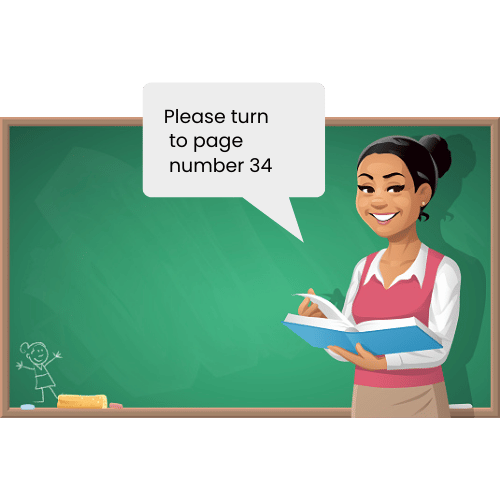
Everyday Examples of Functions
Inviting: “Do you want to join us for dinner?”
Purpose: to encourage someone to come along.
Refusing: “Thanks, but I can’t tonight.”
Purpose: to decline an offer without offending the other person.
Clarifying: “Do you mean next Monday or this Monday?”
Purpose: to check understanding and avoid confusion.
Apologising: “Sorry, I didn’t catch that.”
Purpose: to acknowledge a communication breakdown and ask for repetition.
Notice how none of these examples are primarily about grammar—they are about the speaker’s aim.
Why Functions Matter in ESL
For learners, mastering grammar and vocabulary alone does not guarantee successful communication. A student might know how to form the present simple tense but still struggle to refuse politely or ask for clarification. Functions give them the tools to use language in real-world interaction.
Consider two learners:
- Learner A knows the sentence “I don’t want to go.” Grammatically correct, but blunt and possibly rude.
- Learner B knows the function of refusing politely and says: “Thanks for inviting me, but I already have plans.”
Both learners express refusal, but Learner B achieves it more naturally and appropriately. This is the difference between knowing grammar and knowing functions.
Exponents: How We Express Meaning
When we talk about functions, we are talking about the purpose of communication. But how do we express that purpose in actual words? This is where exponents come in. An exponent is the real phrase, sentence, or expression that a speaker or writer uses to show a function. Functions stay constant, but exponents vary. The difference between sounding natural and sounding awkward often depends on whether learners choose the right exponent for the situation.
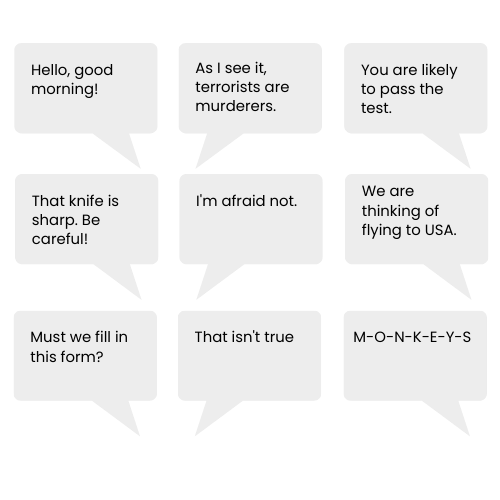
How an exponent plays its role
An exponent is the real phrase, sentence, or expression that a speaker or writer uses to show a function.
Think of it like this:
- The function is the intention (what you want to do).
- The exponent is the form (what you actually say or write to do it).
For example:
- Function: thanking
- Exponent 1: “Thanks a lot.” (informal, used with friends)
- Exponent 2: “I really appreciate your help.” (neutral, suitable for general situations)
- Exponent 3: “I am most grateful for your assistance.” (formal, suitable in professional or official contexts)
The function is always the same—thanking someone—but the exponent changes depending on the situation, audience, and level of formality.
Why Are Exponents Important?
- They show variety. Learners see that there is more than one way to achieve the same function.
- They show register. A phrase that is fine with a friend may sound too casual with a teacher or boss.
- They make communication natural. If learners only know one phrase, they may sound repetitive or even inappropriate in certain contexts.
For example: A learner who only knows “Thank you very much” might use it in all situations—even when texting a close friend—where a simple “Thanks!” would sound more natural.
Functions: An ESL Classroom Example
Imagine a writing lesson on thank-you messages:
- A business student writes in a formal email:
“I am writing to express my sincere gratitude for your guidance during my training.”
Function: thanking.
Exponent: formal, polite, and professional. - A teenager writes in a WhatsApp chat:
“Thanks sooo much for helping me with my homework!”
Function: thanking.
Exponent: informal, casual, and emotional.
Both utterances serve the same purpose—thanking—but the way they are expressed is different because of the context (formal business vs. informal social chat).
Using Functions in Context
Language never exists in isolation. The context,that is, who is speaking, where they are, what their relationship is, and why they are communicating, determines how we interpret meaning. The same words can carry very different functions depending on these factors. Think of context as the “background story” of communication. Without it, we cannot truly understand why something is being said. The same words can express different functions, and the same function can be expressed by different words. Context is what helps us decide which meaning is intended.

One Sentence, Many Functions
Take the sentence: “I’m so tired.”
- Student to teacher in class:
- Function: requesting a break.
- The student is not simply sharing feelings; they are hoping the teacher will let the class rest.
- Patient to doctor:
- Function: describing a physical condition.
- Here, the purpose is to explain a health issue, not to ask for a break.
- Friend to friend:
- Function: complaining.
- In this case, the speaker may be looking for sympathy or understanding.
The same exponent (“I’m so tired”) shifts its function based on context. This is why teachers cannot teach functions by lists of sentences alone—students need to see how use changes with situation.
Why Context Matters
Prevents Misunderstanding
Without context, learners may guess the wrong meaning. For example, “You must come to dinner” could be advice, obligation, or invitation depending on tone and setting.
Develops Pragmatic Awareness
Learners often translate directly from their L1, but what is polite in one culture may sound rude in another. Context shows when to soften or strengthen language.
Encourages Flexible Communication
Instead of memorising one “correct” phrase, students learn to adapt their language to different situations.
An ESL Classroom Example
Possible Scenarios:
- A mother tells her child: “I’m so tired.” → Function: refusing to play.
- A colleague at work says: “I’m so tired.” → Function: explaining poor performance.
- A traveller at a hotel reception says: “I’m so tired.” → Function: requesting a room quickly.
This type of activity highlights how context shapes interpretation.
Understanding Registers: Formal, Neutral, and Informal
When we speak or write, we do not always use the same style of language. The register we choose depends on the situation, the people involved, and the relationship between them. In simple terms, register is the degree of formality in language. It is not about right or wrong grammar. It is about choosing the appropriate level of formality to suit the audience, purpose, and situation. By learning to adjust register, learners sound more natural and avoid communication breakdowns.

Examples of Register
Formal:“I would like to extend my congratulations on your successful completion of the project.”
Suitable for a business letter, graduation ceremony, or workplace email.
Neutral:“Congratulations on your achievement.”
Suitable for speaking to a colleague, neighbour, or classmate.
Informal:“Well done, mate!”
Suitable for chatting with a close friend or family member.
The function is the same—congratulating—but the register changes the tone.
Why Register Matters
Choosing the wrong register can lead to inappropriate or awkward communication.
- If a student writes to their teacher: “Hey dude, what’s up?” Too informal, may sound disrespectful.
- If a student says to a friend: “I wish to convey my sincerest appreciation for your assistance.” Too formal, may sound unnatural.
The message is not wrong grammatically, but it does not match the situation. This is why register and appropriacy are essential skills in language learning.
ESL Classroom Example
Look at the following three ways of inviting someone:
- Formal:“Would you care to join me for lunch?”
- Suitable when speaking to a manager, a new colleague, or in a polite business setting.
- Neutral:“Do you want to have lunch together?”
- Suitable with classmates, friendly colleagues, or acquaintances.
- Informal:“Grab lunch?”
- Suitable with close friends or family members.
Classroom Task: Discuss:
- Which invitation would they use with a teacher?
- Which would they use with a colleague?
- Which would they use with a close friend?
Appropriacy: Matching Language to Situation
Appropriacy refers to using language that suits the situation, the relationship between speakers, and the purpose of communication. It is not enough for an utterance to be grammatically correct; if the level of formality is mismatched to the context, the communication may feel awkward, impolite, or even humorous when unintended. Appropriacy is about choosing language that is not just correct, but socially suitable. Learners need to understand that appropriacy depends on context, culture, and relationships. By practising appropriacy, they build confidence to use English in real-world situations without causing unintended offence or awkwardness.

Why Appropriacy Matters
Clarity of Communication
- Even correct grammar can fail if the tone doesn’t fit. For instance, “Please refrain from creating excessive noise” is clear, but it may sound strange in a kindergarten classroom where “Quiet down, please” is more appropriate.
Social Relationships
- The wrong choice of register can signal distance, over-familiarity, or even disrespect. For example, calling your boss “mate” may be misinterpreted, even if in some cultures it is normal.
Pragmatic Competence
- Language learners often focus on grammatical accuracy but overlook the social rules of communication. Appropriacy teaches them to adjust their speech to avoid sounding rude or unnatural.
ESL Classroom Example
Scenario: A job interview
Appropriate:
Candidate says: “It’s a pleasure to meet you.”
Suitable for the situation: polite, professional, and natural.
Too informal:
Candidate says: “Hey dude, nice to meet ya!”
Inappropriate, as the casual greeting lowers the formality expected in a professional setting.
Too formal:
Candidate says: “It is my esteemed honour to converse with you.”
Inappropriate, as the excessive formality sounds unnatural and insincere.
Teaching Functions in the ESL Classroom
Teaching functions is an important part of modern ESL methodology because it equips learners not only with the forms of language (grammar and vocabulary) but also with the purposes of communication. When learners understand them, they are better prepared to use English meaningfully in real-life contexts. By combining functions with grammar, teachers provide learners with both the tools (grammatical forms) and the skills (communicative purposes) to use English effectively in real situations.

Why Teach Functions?
They emphasise communication over rules.
Traditional teaching often focused on grammar drills, where students practised forms without much awareness of how to use them in real interaction. Teaching functions shifts the focus: instead of simply learning how to form the present perfect, learners understand how to apologise, how to suggest, or how to refuse politely. This makes lessons more practical and communicative.
Example:
- Grammar-focused: “She has lived here for three years.”
- Function-focused: “I’ve been waiting for ages!” → expressing complaint.
Learners practise language in chunks, not isolated words.
Functions are usually expressed through ready-made chunks of language such as “Would you mind if…?”, “Sorry, I didn’t catch that”, or “Why don’t we…?”. Learning these fixed expressions helps students sound more fluent and natural, because they are practising how language is actually used, not just building sentences word by word.
Example:
Instead of teaching only the verb suggest, teachers can give learners the chunk: “Why don’t we go to the park?”. Here, students learn both the function (making a suggestion) and the natural phrasing.
They prepare students for real-life situations.
Functions are highly practical. Learners need them to navigate real-world communication, whether in spoken or written form. Knowing the past tense is useful, but knowing how to tell a story, complain in a shop, or express agreement politely is what helps them succeed in daily life.
Examples of real-life functional needs:
- Writing a letter of complaint to a landlord.
- Asking for clarification in a meeting.
- Expressing preferences when ordering food.
- Agreeing and disagreeing politely in group discussions.
Functions and Grammar Together
In modern communicative teaching, functions are not taught separately from grammar. Instead, teachers introduce the function along with the structures that carry it. This avoids confusion and helps learners see how form and function work hand in hand.
- Function: expressing likes
- Structure: I like… / She likes…
- Exponents: “I like watching football.” / “She likes swimming.”
- Function: expressing dislikes
- Structure: I don’t like… / He doesn’t like…
- Exponents: “I don’t like spicy food.” / “He doesn’t like getting up early.”
By presenting functions with their supporting grammar, learners gain both:
- Practicality (real-world use)
- Accuracy (correct forms)
ESL Classroom Example
Imagine a beginner class learning about likes and dislikes.
- Step 1: Teacher introduces the structure I like + noun/verb-ing.
- Step 2: Teacher connects it to the function of expressing preferences.
- Step 3: Learners practise through a survey: “Do you like pizza?” → “Yes, I like pizza” / “No, I don’t like pizza.”
- Step 4: Learners compare results in pairs: “She likes pizza, but he doesn’t like it.”
Here, grammar (present simple) and function (expressing likes/dislikes) are integrated. Learners not only learn the rule but also see how it works in meaningful communication.
Benefits of Combining Functions with Grammar
Avoids overload. If learners only studied functions, they might encounter too many new sentence patterns at once. Linking them with specific grammar helps manage the input.
Adds meaning to grammar. Instead of teaching present continuous as an abstract rule, a teacher can show it in use: “I’m studying English right now” → describing current action.
Supports transfer. Once learners understand the structure-function link, they can apply it in new contexts. For instance, “I don’t like coffee” can easily transfer to “I don’t like getting up early.”
Challenges in Teaching Language Functions
When teaching functions in the ESL classroom, teachers often face challenges that go beyond vocabulary and grammar. Learners may form correct sentences but still fail to communicate naturally or appropriately. Below are some of the most frequent difficulties and why they matter. Please note that this section is more related to ESL trainers and teachers.
Over-Emphasis on Grammar
Many learners are trained to value grammatical accuracy above everything else. They may be able to produce correct sentences in the past tense, present perfect, or conditionals, but struggle when it comes to using language for social purposes such as apologising, refusing, or making requests.
Example:
- Learner A: “Yesterday I go… no… I went to the shop.” (corrects grammar)
- Learner B: “Yes, you went yesterday.” (also grammar-focused)
→ Both learners show grammatical knowledge, but neither demonstrates how to apologise if they interrupt, how to clarify meaning, or how to make the conversation natural.
Teaching implication:
Teachers should balance grammar with functional practice. For example, instead of drilling only past tense forms, include tasks like: “Tell your partner about yesterday’s activities, but also practise showing interest, asking questions, or politely interrupting.”
Confusion Between Formality Levels
Learners often know polite words such as please but may overuse them or fail to adjust to context. Others may avoid politeness strategies altogether because they are unsure how to apply them.
Examples:
- Overuse: “Please, teacher, can you please explain, please?” → Too many pleases make it sound unnatural.
- Underuse: “Give me your pen.” → Grammatically correct, but too direct, lacking the softening expected in English.
Learners may also misjudge when to use formal, neutral, or informal language. For example:
- Saying “Would you be so kind as to lend me a pen?” to a classmate → Too formal.
- Saying “Hey, gimme that pen” to a teacher → Too informal.
Teaching implication:
Include register-awareness activities, where learners categorise phrases as formal, neutral, or informal, then practise choosing the right one for a given situation.
Cultural Influence
What counts as polite, respectful, or appropriate in one culture may be considered rude or unusual in another. Learners may transfer communication habits from their first language into English without realising the cultural differences.
Examples:
- In some cultures, refusing directly (“No, I don’t want that”) is normal, but in English-speaking contexts it may sound blunt or impolite. A softer refusal (“Thanks, but I’m not interested”) is often expected.
- In some languages, avoiding eye contact shows respect, but in English-speaking contexts it may be seen as lack of confidence or honesty.
- In certain cultures, using titles (Mr., Mrs., Sir, Madam) is mandatory, while in others, first names are the norm.
Teaching implication:
Teachers should raise awareness by comparing L1 norms and English norms, discussing how politeness and appropriacy vary. This helps learners avoid miscommunication and develop pragmatic competence (the ability to use language appropriately in social interaction).
Activities to Teach Language Functions
Teaching functions becomes more effective when learners actively use language in meaningful tasks rather than just memorising examples. Below are practical activities teachers can use to help learners recognise, practise, and apply functions in different contexts. Please note that this section is more related to ESL trainers and teachers.
Role-Plays
The focus: Refusing politely
Task: Students practise being invited to a party when they already have plans.
Steps:
- Divide learners into pairs.
- Student A invites Student B: “Would you like to come to my party on Saturday?”
- Student B refuses politely:
- “Thanks for inviting me, but I can’t because I already have plans.”
- “I’d love to, but I’m busy that day.”
- Students then switch roles to practise both inviting and refusing.
Variation:
- For beginners: Provide sentence starters (e.g., “I can’t because…”).
- For advanced learners: Add extra context (e.g., refusing a work invitation vs. a friend’s invitation) to highlight register and appropriacy.
Why it works: Learners practise functional phrases in realistic scenarios, which builds fluency and social awareness.
Function Chains
The focus: Developing appropriacy and natural conversation flow
Task: Students sit in a circle. One starts with an exponent, and the next responds with a suitable exponent.
Example:
- Student A: “Sorry, I can’t come.” → (Function: refusing)
- Student B: “That’s okay, maybe another time.” → (Function: accepting refusal politely)
- Student C: “Yes, we should definitely plan for next week.” → (Function: suggesting)
Steps:
- Teacher writes possible exponents on the board to help learners get started.
- The first student uses one phrase.
- Each student continues the chain by choosing a logical, appropriate response.
Variation:
- Add a time limit (e.g., 3 seconds to reply).
- For higher levels, learners create their own exponents without teacher support.
Why it works: Learners practise not just one function, but how different functions connect naturally in conversation.
Matching Activity
The focus: Recognising functions and exponents
Task: Learners match sentences (exponents) with their corresponding functions.
Examples:
- “Excuse me, could you tell me the time?” → Asking for information
- “Never mind, it doesn’t matter.” → Minimising a problem
- “That’s a great idea!” → Expressing agreement
- “Sorry, could you repeat that?” → Asking for clarification
Steps:
- Teacher prepares cards: one set with exponents, one set with functions.
- Learners work in pairs or small groups to match them.
- Groups explain their choices, discussing why an exponent fits a particular function.
Variation:
- Make it a competition: which group finishes correctly first?
- Add “trick” exponents that could match more than one function, to raise awareness of context.
Why it works: Learners become aware that different phrases achieve different communicative purposes, and that one phrase may serve multiple purposes depending on context.
Register Sorting
The focus: Formal, neutral, and informal registers
Task: Learners classify sentences into registers and decide when each would be appropriate.
Examples for “asking for help”:
- Formal: “Would you mind assisting me with this task?”
- Neutral: “Could you help me with this?”
- Informal: “Can you give me a hand?”
Steps:
- Teacher provides a list of exponents.
- Learners sort them into three categories: formal, neutral, informal.
- Learners then match each with a context (e.g., formal = job interview, neutral = classroom, informal = with a friend).
Variation:
- Higher levels: Learners create their own exponents for each register.
- Lower levels: Teacher gives fewer, simpler examples and explains context more directly.
Why it works: Learners practise choosing language appropriate to situation and audience, a key skill for effective communication.
Functions: Summary
- Functions are the purposes of communication.
- Exponents are the phrases used to realise functions.
- Context determines how an exponent is understood.
- Register can be formal, neutral, or informal.
- Appropriacy is choosing the right register for the situation.
- Teaching functions helps learners communicate naturally.
- Functions are best taught together with their supporting grammar structures.

Noel’s Questions and Answers Corner
What is the difference between functions and grammar?
Functions deal with the purpose of communication, why a speaker says something. They answer the question: What does this utterance do? For example, “Could you open the window?” is grammatically a question, but functionally it is a request. Grammar, on the other hand, deals with the form of language, how words are combined into sentences. It tells us about tenses, word order, and sentence patterns. For example, the same request above uses the modal verb could + base verb, which is part of its grammar. So, grammar gives the structure, and functions give the reason and meaning behind the structure.
Can the same exponent express more than one function?
Yes, the same phrase can serve different functions depending on context. For example:
- “I can’t believe it!”
- Said when receiving a gift = expressing surprise.
- Said when disagreeing with someone’s opinion = disagreeing.
- Said when a service is poor = complaining.
This shows that we cannot decide a function by looking at words alone; we must consider who is speaking, to whom, and why. TKT candidates should always think about purpose in context when identifying functions in exam questions.
Why do learners need to study registers?
Because register helps learners choose language that is appropriate for the situation. Using the wrong register may not be offensive in terms of grammar, but it can damage communication.
For example:
- “What’s up?” : fine with friends, but too casual with a manager.
- “Would you be so kind as to permit me to sit here?” : grammatically correct, but sounds too formal in a café with friends.
Studying register makes learners aware of formal, neutral, and informal levels of language, helping them avoid social misunderstandings and communicate respectfully and naturally.
How can beginners benefit from learning functions?
Even at the earliest levels, learners need functional survival phrases. They may not yet master complex grammar, but they can still learn to:
- Greet: “Hello.” / “Good morning.”
- Apologise: “Sorry.” / “Excuse me.”
- Request: “Can I borrow a pen?”
- Thank: “Thank you.”
These expressions allow beginners to participate in real-life communication immediately. Teaching them functions early helps learners feel successful, motivated, and able to manage everyday situations, such as buying something in a shop or asking for directions.
Should I teach functions separately or with grammar?
The most effective way is to teach them together. If learners only practise functions without grammar, they may memorise fixed sentences but struggle to adapt them. If they only study grammar, they may form correct sentences but not know how to use them in real communication.
For example:
- Grammar focus: present simple : “I like pizza.”
- Function focus: expressing likes: learners practise saying what foods, hobbies, or activities they enjoy.
By linking grammar and function, learners not only learn accuracy (correct form) but also appropriacy (knowing when and how to use the form). This integration is especially useful in TKT, where many questions test both elements together.

TKT Exam Practice Tasks: Functions
TKT Unit 4:
Practice Task 1
Instructions:
For questions 1–6, match each exponent (1–6) with each functions (A–G). There is one extra option you will not use.
Functions
A) Making an excuse
B) Predicting
C) Inviting
D) Asking for clarification
E) Apologising
F) Expressing reluctant agreement
G) Complaining
Exponents
- “Would you care to join me for a meal this evening?”
- “I suppose you’re right about that.”
- “Could you tell me how this machine works?”
- “Oh no, I left my keys in the office again.”
- “I’m terribly sorry for interrupting.”
- “It’ll probably get colder later tonight.”
TKT Unit 4:
Practice Task 2
Instructions:
For questions 1–6, match each context (1–6) with the function (A–G). There is one extra option you will not use.
Functions
A) Refusing
B) Advising
C) Offering help
D) Asking for repetition
E) Suggesting
F) Requesting
G) Clarifying
Contexts
- A student to a teacher: “Can I borrow a dictionary for a moment, please?”
- A teenager to a friend: “Nah, I don’t feel like going out tonight.”
- A doctor to a patient: “You should really cut down on sugar.”
- A customer to a shop assistant: “Sorry, could you repeat the price?”
- A worker to a colleague: “Don’t worry, I’ll handle it.”
- A colleague to another: “Why don’t we try a different approach?”
TKT Unit 4:
Practice Task 3
Instructions:
For questions 1–6, match each exponent (1–6) with the best description of appropriacy (A–G). There is one extra option you will not use.
Appropriacy
A) Too formal for the situation
B) Too informal for the situation
C) Polite and appropriate
D) Inappropriately demanding
E) Friendly but not suitable for context
F) Perfectly acceptable for classroom use
G) Neutral but awkward
Exponents
- “Hey dude, what’s up?” (said to a job interviewer)
- “Would you mind if I asked you a question about the project?” (said to a colleague at lunch)
- “Good morning, everyone.” (said by a teacher to a class)
- “I demand that you refund me immediately!” (said by a polite customer in an email)
- “Cheers, mate!” (said to a manager after a formal meeting)
- “I sincerely appreciate your assistance with this matter.” (said in a business email)

Reference Resources: Functions
Textbooks
- Functions of English
Leo Jones & David Alexander (Cambridge)
A classic student book built entirely around language functions such as apologising, inviting, refusing, and suggesting. - Functions in English
Blundell, Higgens & Middlemiss (OUP)- One of the best-known collections of functional exponents. Organised by communicative purpose (agreeing, complaining, persuading, etc.). Very practical for lesson planning, though written a bit older style — still a goldmine for examples.
- Pair Work 1 & 2
Peter Watcyn-Jones (Penguin/Longman)- Covers functions like asking for clarification, suggesting, agreeing, and complaining through games and interactive tasks. Simple pair-work activities built around functional language.
- Work on Your Phrasal Verbs and Functional English
HarperCollins English Skills Series- Has sections on functional chunks (e.g., how to make polite requests, give advice, apologise). Accessible and exercise-based, good for independent study.
- Speaking Extra: A Resource Book of Multi-Level Skills Activities
Mick Gammidge (Cambridge)
Contains a wide variety of speaking activities organised around functions like refusing, negotiating, and asking for information. Very practical for teachers who want ready-made classroom activities.
Online Resources
- ELLii – Functional English
– Offers ready-to-teach ESL lessons focused on conversational functions (e.g. apologising, inviting, clarifying) with dialogues, audio, worksheets. - Cambridge TeachingEnglish – Teaching Resources
– A large repository of lesson plans, classroom ideas, and professional development content. You’ll find materials that engage with register, discourse, and functional tasks. - ELTBase – ESL Resources by Language Function
– This site categorizes worksheets, quizzes, and materials by function (e.g. making suggestions, complaining). It’s quite practical for learners who want extra practice. - Bridge / TEFL blog – Free ESL lesson plans
– A curated list of good ESL lesson-plan websites, many of which include communicative functional tasks. Useful for sourcing extra material.

Previous Lesson: Phonology
Next Lesson: Reading
Home: Module 1 Lesson Navigator