
Planning an Individual Lesson and a Sequence of Lessons
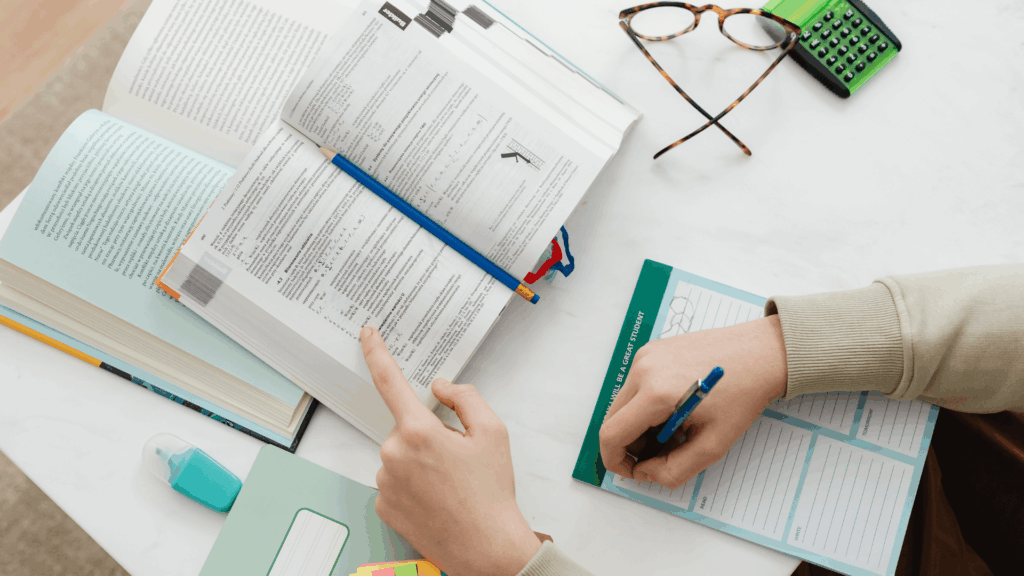
Planning lessons is one of the most important skills for any teacher of English. Whether you are preparing for your TKT exam or getting ready to teach a real class, you need to know how to design a lesson that has clear aims, logical steps, and activities suited to your learners. A well-prepared lesson makes teaching smoother and learning more effective.
Learning Outcomes
By the end of this lesson, you will be able to:
- Define what is meant by planning an individual lesson and a sequence of lessons.
- Identify the components of a good lesson plan (aims, outcomes, stages, materials, timing, interaction, personal aims).
- Design lesson stages that link logically to each other.
- Recognise different types of lesson sequences (structural, integrated skills, project-based).
- Apply these principles to create motivating and coherent ESL lessons.
- Learning Outcomes
- What Do We Mean by Planning Lessons?
- Planning Lessons: An Individual Lesson
- An Individual Lesson: Teaching Comparatives
- Planning Lessons: A Sequence of Lessons
- Summary: Planning Lessons
- Planning Lessons: Common Questions And Answers
- A Practice Task: Planning Lessons
- Reference Resources – Planning Lessons
What Do We Mean by Planning Lessons?
In teaching, planning lessons means preparing in advance how the lesson will unfold. It is like drawing a map before setting out on a journey. Without a map, you might get lost or waste time; with a plan, you know where you are going and how to get there. Planning is not about writing a script that you must follow word for word. It is about organising ideas, predicting what learners will need, and preparing solutions for possible challenges.
When planning a lesson, teachers usually think carefully about several elements:
Aims
Your aim answers the question: Why am I teaching this lesson?
It is the broad purpose or direction of the lesson. For example:
- “To introduce and practise the use of the past continuous for describing actions in progress.”
- “To develop learners’ ability to skim a text for the main idea.”
Aims should always connect to the learners’ needs. A vague aim like “to do some grammar” does not give you or your learners clear focus.
Learning Outcomes
Outcomes are the specific, measurable things learners should be able to do by the end of the lesson. They make the aim concrete and observable. For instance:
- Learners can use five comparative adjectives correctly in short dialogues.
- Learners can identify three reasons for pollution in a reading text.
These outcomes allow you to check whether the aim was achieved and give learners a sense of progress.
Stages
A lesson is not one single block of teaching. It is made of stages, each with its own purpose. Stages are like the steps on a staircase that lead to the final outcome.
For example, in a vocabulary lesson:
- Stage 1: Warmer (to activate interest and prior knowledge)
- Stage 2: Presentation (to introduce new words)
- Stage 3: Controlled practice (to check form and meaning)
- Stage 4: Freer practice (to encourage personal use of the words)
- Stage 5: Closure (to review and consolidate)
Carefully chosen stages prevent lessons from feeling random and keep learners moving forward logically.
Materials and Resources
These are the tools you bring into the classroom. They can be published materials, such as a coursebook or worksheets, or teacher-prepared items, like flashcards, handouts, or PowerPoint slides. Authentic resources, such as menus, newspapers, or video clips, can make lessons more engaging and meaningful.
The key question is not what do I have available? but which materials best help my learners achieve the aim?
Timing
Even the best lesson plan will fail if you misjudge timing. Each stage should have an approximate length so you can manage the flow of the lesson. For example:
- Warmer: 5 minutes
- Presentation: 10 minutes
- Controlled practice: 15 minutes
- Freer practice: 15 minutes
- Closure: 5 minutes
Timing ensures balance. If you spend too long on one task, learners may never reach the main aim. On the other hand, if activities end too quickly, the class may lack depth.
Interaction Patterns
This refers to how learners will work during each stage. Different interaction patterns create different learning opportunities:
- Individual work helps learners reflect and develop independence.
- Pair work encourages communication and lowers anxiety.
- Group work allows collaboration and problem-solving.
- Whole class activities provide shared experiences and teacher guidance.
A well-planned lesson usually includes a variety of patterns to keep energy high and give learners different ways to engage.
Personal Aims
Planning lessons is not only about learners. Teachers also use it as a way to improve their own practice. A personal aim is something you want to focus on in your teaching, such as:
- Giving shorter, clearer instructions.
- Using gestures instead of translation.
- Writing more neatly on the board.
Including personal aims reminds you that teaching is a skill you are constantly developing.
Planning Lessons: An Individual Lesson
When we plan a single lesson, we are preparing a complete, self-contained unit of teaching that has a clear focus and a logical shape. A lesson is usually around 40 to 60 minutes long, and within that time the teacher aims to take learners from where they are now to a slightly higher level of understanding or skill. To do this successfully, teachers need to reflect on several guiding questions before they walk into the classroom.
What is my overall aim?
This is the broad purpose of the lesson. It defines the main skill or language point learners should practise. For example: to introduce comparatives, to develop reading for gist, to practise writing informal emails.
Will the topic be interesting and motivating for learners?
A good lesson topic catches learners’ attention. For teenagers, comparing sports stars may be more engaging than comparing furniture. For adults, discussing jobs and workplaces may feel more relevant than describing cartoon characters.
What learning outcomes do I expect?
Outcomes make the aim specific and measurable. Instead of saying “learn comparatives,” we might expect: students can produce five correct comparative sentences orally and in writing.
Are the activities at the right level?
If tasks are too difficult, learners become frustrated. If they are too easy, learners switch off. Activities must match the learners’ language level, but also stretch them a little so they progress.
Do the stages flow logically from one to another?
A lesson should have a natural order. Each stage should prepare learners for the next step. For instance, a reading task might come before a speaking discussion, so learners have ideas to talk about.
How will I start and end the lesson?
The beginning should warm learners up and set the context. The ending should review what has been learned, give feedback, and leave learners with a sense of completion.
What are my personal aims for this class?
Besides focusing on learners, teachers often set goals for themselves. For example, to reduce teacher talking time, to give clearer instructions, or to monitor group work more actively.
An Individual Lesson: Teaching Comparatives
Let us look at a complete lesson where the aim is to teach comparative adjectives (e.g., taller, bigger, more interesting).
Overall Aim
Learners will be able to use comparative adjectives to describe people and objects.
Learning Outcomes
By the end of the lesson, learners can:
- Produce at least five correct comparative sentences in speech.
- Write at least three accurate comparative sentences in short written tasks.
- Use comparatives to make real-life comparisons in a conversation.
Stages in the Lesson
Warmer (5 minutes)
The teacher shows two contrasting pictures: a small house and a large house. Learners are asked: Which house is bigger? This sparks interest and activates prior knowledge.
Purpose: To set the context for comparison and get learners thinking in English.
Presentation (10 minutes)
The teacher introduces the target structure using more examples:
- “The red car is faster than the blue car.”
- “My bag is heavier than your bag.”
- “This film is more interesting than that one.”
The teacher writes the pattern on the board (adjective + -er/ more + adjective + than). Pronunciation is also modelled and practised (e.g., bigger, faster, more expensive).
Purpose: To show learners how comparatives are formed and used in real sentences.
Controlled Practice (15 minutes)
Learners complete gap-fill sentences on a worksheet.
After completing the task individually, they compare answers in pairs to check for meaning and form. The teacher then monitors, provides feedback on any repeated grammar or spelling errors, and highlights correct usage on the board.
To reinforce accuracy, the teacher conducts a short whole-class review. For example, asking:
- “Why do we use since in this sentence and not for?”
- “Can anyone give another example using comparative adjectives?”
This stage ensures learners practise the target language accurately before moving to freer production.
Freer Practice (15 minutes)
In pairs, learners make comparisons about familiar people or things. For example:
- Compare two celebrities: “Cristiano Ronaldo is richer than Lionel Messi.”
- Compare classmates: “Ali is taller than Maria.”
- Compare objects in the room: “This table is longer than that one.”
The teacher monitors and helps where needed.
Purpose: To encourage learners to personalise the language and use it fluently in real contexts.
Feedback (5 minutes)
The teacher selects examples from the freer practice and writes them on the board, highlighting both correct usage and common mistakes (e.g., “more taller” → incorrect). Purpose: To correct errors, reinforce accuracy, and give positive reinforcement.
Closure (5 minutes)
The teacher reviews the lesson aim: “Today we learned how to compare things using adjectives.” Learners then write two comparative sentences about themselves as homework, such as:
- “I am taller than my sister.”
- “Maths is more difficult than English.”
Purpose: To consolidate learning and give learners a chance to practise outside class.
Planning Lessons: A Sequence of Lessons
Sometimes one lesson is not enough to fully teach or practise a skill, language point, or topic. Learners may need repeated exposure, more practice, and opportunities to apply what they learn in different ways. In these cases, teachers plan a sequence of lessons.
A sequence is a series of connected lessons that build on each other. Each lesson has its own aim and outcome, but together they lead to a broader goal. The idea is to move step by step, gradually developing learners’ understanding and skills.
Sequences can be organised around grammar, skills, or themes such as projects. They provide learners with a sense of continuity, allow for recycling of language, and create variety across lessons.
Let’s look into types of lesson sequences.
Structural Sequence (Grammar Focus)
This type of sequence helps learners gradually develop control over a grammar area. It usually moves from revision to new input to contrast and practice.
Example: Past Simple and Present Perfect
- Lesson 1: Revision of past simple
Learners review past simple forms through activities like story-telling about yesterday’s events. - Lesson 2: Introduction of present perfect
Learners are introduced to present perfect for experiences, e.g., “I have visited India.” - Lesson 3: Contrast between past simple and present perfect
Learners practise choosing between “I went to India in 2019” and “I have been to India.”
Why it works: Each lesson builds on the previous one. The revision in Lesson 1 activates prior knowledge. Lesson 2 adds a new structure. Lesson 3 ties the two together, addressing confusion between them.
Integrated Skills Sequence
Language learning is not only about grammar; learners also need to practise the four skills (reading, writing, listening, speaking). An integrated sequence combines them in a connected way, often around a topic.
Example: Holidays
- Lesson 1: Vocabulary and reading
Learners learn holiday-related vocabulary (flight, sightseeing, beach) and read a short travel blog. - Lesson 2: Speaking practice through a class survey
Learners interview classmates about favourite holidays and present findings orally. - Lesson 3: Writing practice
Learners write a letter or blog post describing their own holiday experiences.
Why it works: Vocabulary introduced in Lesson 1 supports speaking in Lesson 2. Speaking provides ideas for writing in Lesson 3. Skills build on each other in a natural way.
Project Work Sequence
Projects motivate learners by giving them a clear, meaningful outcome. The focus is not only on language but also on collaboration, creativity, and presentation skills.
Example: Local Festivals Project
- Lesson 1: Research
Learners work in groups to gather information about different local festivals using books, the internet, or interviews. - Lesson 2: Group discussions and planning
Learners decide how to present their findings. They divide roles, design posters, and rehearse explanations. - Lesson 3: Presentation
Groups present posters to the class, answer questions, and receive feedback.
Why it works: Learners use language for authentic purposes. Each stage mirrors real-world skills: researching, planning, and presenting.
Features of an Effective Sequence
- Clear progression: Each lesson moves forward from the last.
- Recycling: Key language and skills reappear in different contexts.
- Variety: A balance of grammar, skills, and activities prevents repetition.
- Flexibility: Teachers may adapt sequences depending on learners’ progress and needs.
- Final outcome: In many sequences, there is a sense of achievement at the end, whether it is mastering a contrast, writing a final text, or presenting a project.
Example in Practice: Environmental Issues Sequence
Here’s how a teacher might plan a short sequence on environmental issues for an intermediate ESL class:
- Lesson 1 (Vocabulary and reading): Learners read an article about recycling and highlight environmental words (e.g., pollution, waste, recycle).
- Lesson 2 (Listening and speaking): Learners listen to a talk about recycling habits in different countries, then discuss which ideas could apply in their own community.
- Lesson 3 (Writing and project): Learners write group posters suggesting three actions their town could take to reduce waste, and present them to the class.
This integrated approach develops vocabulary, reading, listening, speaking, and writing across a single theme.
Summary: Planning Lessons
- Planning ensures lessons have clear aims and logical steps.
- Individual lesson planning considers aims, learning outcomes, materials, timing, and personal aims.
- Lesson stages should connect smoothly and lead towards the aim.
- Sequences of lessons help learners build knowledge over time.
- Different types of sequences include structural, integrated skills, and project work.
- Variety in pace, activity, and interaction keeps learners engaged.
- A good start and ending give structure and confidence to both learners and teacher.
Planning Lessons:
Common Questions And Answers
Q1. Why is lesson planning important for ESL teachers?
It ensures that teaching is focused, time is used effectively, and learners achieve clear outcomes.
Q2. What is the difference between a lesson aim and a learning outcome?
The aim is the general purpose of the lesson, while the outcome is a specific, measurable result.
Q3. How can I add variety to my lessons?
By changing pace, activity types, skills, interaction patterns, and topics. For example, move from pair work to a game, or from writing to speaking.
Q4. What should I do if my learners finish an activity too quickly?
Plan extra tasks (extension activities) that keep faster learners engaged without leaving others behind.
Q5. What are personal aims in lesson planning?
They are goals for you as a teacher, such as improving instructions, reducing teacher talking time, or experimenting with new techniques.
A Practice Task: Planning Lessons
For questions 1–7, match each example (1–7) with the correct sequence type (A–G). You can use each letter only once.
Sequence type
Sequences
A. Integrated skills sequence: Writing a holiday letter or blog post
B. Structural sequence: Contrast between past simple and present perfect
C. Project work sequence: Final poster presentation on local festivals
D. Structural sequence: Introduction of the present perfect
E. Integrated skills sequence: Reading and vocabulary about holidays
F. Structural sequence: Revision of the past simple
G. Integrated skills sequence: Speaking survey on holiday experiences
Examples
- Learners skim a travel blog, highlighting holiday vocabulary such as sightseeing, flight, beach.
- Learners are introduced to a new tense used for describing experiences at any time in life.
- Learners present group posters on local festivals and respond to questions from peers.
- Learners recall and share what they did yesterday in short narratives.
- Learners compose a short piece of writing about their own holiday, either in letter or blog form.
- Learners practise choosing between a specific past event and a general life experience.
- Learners move around the classroom asking classmates about favourite holidays and report back on the findings.
Reference Resources –
Planning Lessons
Textbooks
- Ur, P. (2012). A Course in English Language Teaching (2nd ed.). Cambridge University Press.
– Offers clear guidance on lesson planning, aims, and practical classroom examples for ESL/EFL teachers. - Scrivener, J. (2011). Learning Teaching (3rd ed.). Macmillan Education.
– A widely used teacher-training book that explains aims, procedures, and lesson staging with clear examples. - Harmer, J. (2015). The Practice of English Language Teaching (5th ed.). Pearson Education.
– Covers how to set aims, lesson sequencing, and the relationship between teaching objectives and classroom practice. - Hedge, T. (2000). Teaching and Learning in the Language Classroom. Oxford University Press.
– Contains a strong section on establishing goals, objectives, and lesson aims, especially useful for reflective teachers. - Brown, H. D. (2007). Principles of Language Learning and Teaching (5th ed.). Pearson Education.
– Though more theoretical, it links learning objectives to practical teaching contexts and learner outcomes.
Online Resources
- Cambridge English Teaching Framework – Cambridge Assessment English
– Includes guidance for teachers on planning lessons, setting aims, and reflective teaching practice.
Next Lesson: Choosing assessment activities
Previous lesson: Identifying the different components of a lesson plan
Home: Module 2 Lesson Navigator